Birkenau Camp End - Rear of Birkenau: The Final Moments
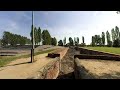
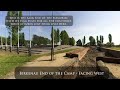
This fence line is the extreme end of the main Birkenau camp. We are facing west. Scroll a bit past the guard tower to view the back end of the Memorial with its flag poles for all the countries who’s citizens lost their lives here. Scroll past the memorial and we are at the back end of Krematorium II. This is where people just off the trains were brought and told they were about to receive a disinfecting shower, and afterward… work. This is the last of the world they would see. This is the last moment in the open air.
Zalman Gradowski and his wife Sonia on their wedding day, c. 1935 “And the faces, white and pink, would turn red, blue and black from the gas. The eyes would fill with blood, so that it would be impossible to know if this was the same face we were looking at now.”
Zalman Gradowski (1910–1944) was a Polish Jewish writer and a member of the Sonderkommando at Auschwitz-Birkenau
“On December 16, 1942, Himmler issued an order to send all Gypsies to the concentration camps, with a few exceptions… The deported Gypsies were sent to Auschwitz-Birkenau, where a special Gypsy camp was erected. Over 20,000 Gypsies from Germany and some other parts of Europe were sent to this camp, and most of them were gassed there… Wiernik described the arrival of the largest Gypsy group brought to Treblinka, in the spring of 1943:
`One day, while I was working near the gate, I noticed the Germans and Ukrainians making special preparations…meanwhile the gate opened, and about 1,000 Gypsies were brought in (this was the third transport of Gypsies). About 200 of them were men, and the rest women and children…all the Gypsies were taken to the gas chambers and then burned’…
Gypsies from the General Government [Poland] who were not sent to Auschwitz and to the operation Reinhard camps were shot on spot by the local police or gendarmes. In the eastern region of the Cracow district, in the counties of Sanok, Jaslo, and Rzeszow, close to 1,000 Gypsies were shot…”