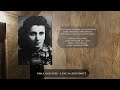

One famous story in Auschwitz lore involves two people who fell in love in the camp. Edward Galinski, camp number 531, and Mala Zimetbaum camp number 19880. Both were popular among their fellow prisoners. Edek, as he was known, was Polish, and Mala, a Polish Jew who had been deported from Belgium.
Edek’s low number meant he was in the first transport of prisoners to arrive in Auschwitz (from Tarnow), June 14, 1940. As she spoke fluent German, Mala was a prisoner-translator for the SS, and thereby given special treatment.
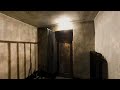
Nevertheless at great risk she smuggled food, messages, and other items to her fellow prisoners. This close-up shows an inscription carved presumably by Edward Galinski.
More Virtual Tour of Auschwitz
< Block 11 Basement and Cells | Father Kolbe >
“Mala and Edek were imprisoned in separate cells in the basement of Block 11, a brick building on the premises of Auschwitz main camp which served as a high security jail and which was aptly referred to as “The Block of Death.” They were repeatedly interrogated by SS officers of the camp Gestapo’s political department. Lilly Majerczyk, one of the prisoners working in the political department, relates [40]: “The interrogations were held in our office. Mala did not give anybody away. We talked with her in the corridor, even though that was strictly prohibited.” The examinations soon turned into torture but Mala and Edek would not reveal anything. Rather, they both stated they had escaped separately in SS uniforms, thus making their interrogators search for accomplices among the SS. The penalty was death, according to recent orders from the RSHA. The sentence had to be confirmed by SS headquarters in Berlin, so the couple were held in their cells for several weeks. Giza Weisblum recalls having received a scribbled message from Mala [41]: “I know what is awaiting me. I am prepared for the worst. Be brave and remember everything.” Lorenz Sichelschmidt, lecturer and researcher at the University of Bielefeld, Germany, Mala – A Fragment of a Life.