

The State Museum Of Auschwitz-Birkenau & Remember.Org Present

Auschwitz Virtual Tour HomeAuschwitz Birkenau virtual tour map - Complete Video List

Auschwitz II Birkenau virtual tour: The Extermination Camp

Birkenau was the largest of the Auschwitz sub-camps and the primary site of mass murder. Built two miles from the original camp in 1941, it held up to 90,000 prisoners at peak capacity across a vast complex of wooden barracks, electrified fences, and watchtowers. The train tracks running through the Death Gate carried hundreds of thousands of Jewish men, women, and children directly to the gas chambers. Four large crematoria — now in ruins, destroyed by the SS before liberation — stood at the far end of the camp.

The Soviet Army liberated Birkenau on January 27, 1945. Of the estimated 1.1 million people murdered at Auschwitz-Birkenau, the vast majority died here.

Use the map below to navigate the tour, or begin at the Death Gate and walk through in sequence.
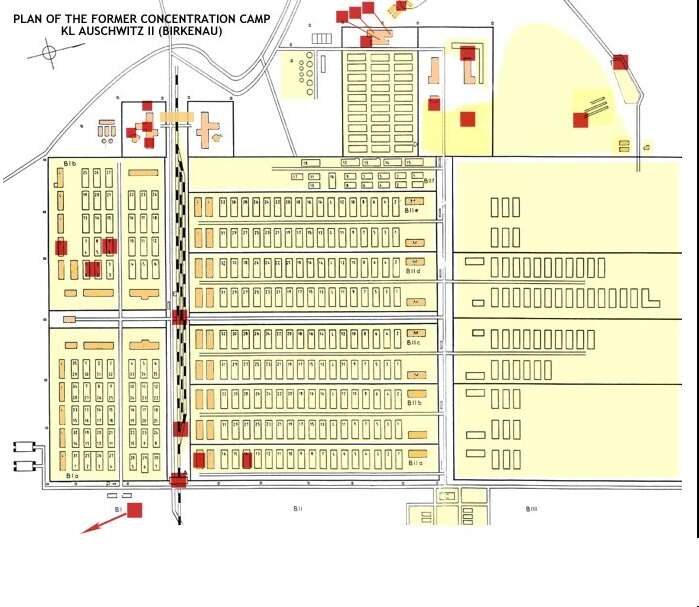
Birkenau Map
Map of Birkenau- Highlighted areas show where the Virtual Tour goes.

Chuck Ferree on Auschwitz Revisted:

"Camp Commandant Rudolf Hoess admitted to a minimum figure of 2.5 million deaths at Auschwitz. Reflecting back some years la ter on the experiments in the basement of Block 11 and later in Gas Chamber and Crematorium 1, Hoess said:

"At the time I did not think about the problem of killing Soviet prisoners of war. It was an order and I had to execute it. However, I will say frankly that killing that group of people by gas relieved my anxieties. It would soon be necessary to start the mass extermination of the Jews, and until that moment neither I Eichmann had known how to conduct a mass killing.

A sort of gas was to be used, but it was not known what kind of gas was meant and how to use it. Now we had both the gas and the way of using it. I had always been concerned at the thought of mass shootings, particularly of women and children. I was already sick of executions. Now my mind was at ease."
*Taken from testimony collected during Hoess’s investigation. (Archives of the Auschwitz State Museum).