Dikh He Na Bister
(Look and Don't Forget): The Roma and Sinti Holocaust
The Romani language has a phrase for what this page asks of you: Dikh He Na Bister. Look and do not forget.
Every August 2, young Roma from across Europe carry these words to Auschwitz-Birkenau. They gather at the site of the Zigeunerlager — the "Gypsy Camp" — where more than 4,000 Roma and Sinti men, women, and children were killed. The youth movement that organizes these gatherings took the phrase as its name. Look and don't forget.
Because for most of a century, the world did neither.
Roma Chakra: SOURCE An estimated 220,000 to 500,000 Roma and Sinti were systematically killed during the Holocaust, driven by a racial ideology similar to that used against European Jews. Yet most students never learn this history. Most teachers have never been given the resources to teach it. For years, Remember.org has shared the stories of Holocaust survivors from the forgotten, like Polish survivors and Lithuanian survivors. No Roma survivor has ever contacted us, which is how we collect stories. And after learning more about Roma and Sinti culture, we understand why.
Roma communities carry their histories differently. Stories live within families and clans, passed through oral tradition, protected by a culture that has survived centuries of persecution by keeping what matters most close. The few survivors who published memoirs or gave public testimony like Ceija Stojka, Otto Rosenberg, Philomena Franz — they chose to break that silence. They knew the cost of speaking, and they spoke anyway.
→ Lina Jackson: A Roma Holocaust Survivor’s Story One of the rarest voices in Holocaust testimony. A two-hour interview with a Sinti survivor who endured Auschwitz, Wolkenburg, Ravensbrück, and Dachau as a child. Full article and embedded video.
→ Roma Holocaust Resistance and the 600 Roma — Roma-led theatre, film, and community work performs on May 16, the day in 1944 when Roma in Auschwitz stood up to the Nazis. Also the story of how one charity keeps Roma history alive through performance and cultural preservation.
→ Roma and Sinti Holocaust Resources — Ten annotated sources for educators, students, and researchers, including the USC Shoah Foundation, USHMM, IHRA, and the Documentation Centre of German Sinti and Roma in Heidelberg.
→ Timeline: The Roma and Sinti Holocaust — From centuries of European persecution through the camps to recognition and remembrance. With August 2, 1944 — the liquidation of the “Gypsy Camp” at Auschwitz-Birkenau — at its center.
These three sites represent strong educational work being done on the Roma and Sinti Holocaust. Each is led or supported by Roma communities, scholars, or international Holocaust education bodies. We encourage teachers, students, and researchers to explore them directly.
The most comprehensive online teaching resource focused exclusively on the Roma and Sinti genocide. Available in 12 languages with over 70 downloadable worksheets, individual biographies, and a teachers’ handbook. Created by OeAD/ERINNERN:AT with support from IHRA and the Foundation for the Memory of the Shoah. Designed for students aged 14 and up. If you’re a teacher looking for classroom-ready material, start here.
A searchable database of Roma and Sinti testimonies from the Czech Republic and Slovakia, with an interactive map connecting stories to specific locations — places of birth, internment, resistance, and rescue. Led by researcher Kateřina Čapková at the Prague Forum for Romani Histories, in partnership with the Museum of Romani Culture in Brno. This project centers the perspective of Roma themselves, shifting away from the perpetrator-authored documents that have dominated scholarship. Launched on August 2, 2023 — Roma Holocaust Memorial Day.
KaskoSan is a Roma-led charity based in Manchester, UK, founded by Juice Vamosi and Maria Palmai. Their work spans documentary filmmaking, theatrical performance, Romani language teaching, dance, and community building. Their musical drama The 600 Roma tells the story of the 600 Roma in Auschwitz-Birkenau who rose up against the SS guards on May 16, 1944, resisting the planned murder of 6,000 fellow inmates. Performed in Romani and English by Roma families and children, it represents what Roma-led Holocaust remembrance looks like when it comes from inside the community. Read more about KaskoSan and their work →
Roma Voices of Survivors and Families
Roma Holocaust survivor testimony is among the rarest in the historical record. Listen to the voices of a new generation, and survivors, connect and awaken.
Dikh He Na Bister - Roma Genocide Remembrance Initiative 2014
Since 2010 ternYpe organizes the "Roma Genocide Remembrance Initiative". This Initiative has been realized thanks to great dedication and determination of over 60 Roma and non-Roma youth organizations that participated in the event.
FAQ
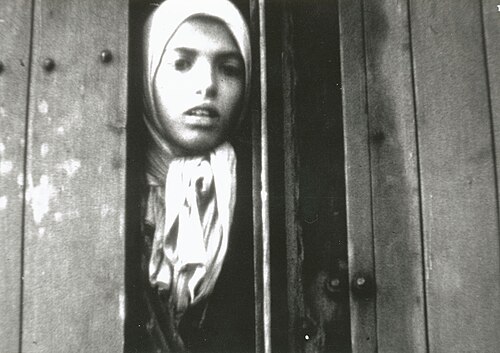
A historically famous image taken by the SS of 10-year-old Settela Steinbach, a Dutch Romani girl on a train to Auschwitz in 1944, mistaken as Jewish for years by historians. By Rudolf Breslauer (1903-1945) – NPO-Geschiedenis, May 2011 (still from film by Werner Rudolf Breslauer); see also Verhalen van een plek, Public Domain, Link
What was the Roma Holocaust?
The Roma Holocaust was the genocide of European Roma and Sinti peoples by Nazi Germany and its allies during World War II. An estimated 220,000 to 500,000 Roma and Sinti were murdered through mass shootings, concentration camp internment, forced labor, medical experiments, and gas chambers. Roma were classified alongside Jews as “enemies of the race-based state” under the Nuremberg Laws of 1935. Germany did not officially acknowledge this genocide as racially motivated until 1982 — 37 years after the war ended.
How many Roma were killed in the Holocaust?
Historians estimate between 220,000 and 500,000, though some believe the number may be higher. Precise figures are difficult to establish because pre-war Roma populations were not accurately counted: many killings, especially mass shootings in Eastern Europe, were poorly documented. Survivors were not systematically recorded after liberation. In Austria alone, just 10% of the pre-war Roma and Sinti population survived.
What happened on May 16, 1944?
On the evening of May 16, 1944, SS guards came to the “Zigeunerlager” — the Roma family camp at Auschwitz-Birkenau — to carry out its liquidation. Nearly 6,000 Roma and Sinti were held there. They had been warned the night before.
When the guards arrived, the barracks stood locked from the inside. Roma prisoners had broken into a supply store and armed themselves with whatever could be turned into a weapon — pipes, tools, stones, the wooden slats pulled from their own bunks. They refused to be led to their deaths and fought back. The SS arrived in the “Gypsy Camp.” The Roma armed themselves with whatever they could find. The SS withdrew.
Eighty-two years later, in a theatre near Manchester, England, Roma families stand on a stage and perform that night. Children play the prisoners. The words are spoken in Romani and English. The drama is called The 600 Roma, and it’s about how a people remember, when the remembering belongs to them.→
What happened on August 2, 1944?
On the night of August 2–3, 1944, the SS liquidated the “Gypsy Family Camp” at Auschwitz-Birkenau. Over 4,000 Roma and Sinti men, women, and children were forced into the gas chambers and murdered. Accounts from other prisoners say the Roma fought to the very end. This date is now commemorated internationally as Roma Holocaust Memorial Day. See the full timeline →
What does Dikh He Na Bister mean?
Dikh He Na Bister is a Romani phrase meaning “Look and don’t forget.” It is the name of the international Roma youth commemoration initiative that gathers hundreds of young Roma and Sinti from across Europe at Auschwitz-Birkenau each August 2 — Roma Holocaust Memorial Day. The phrase has become a defining expression of Roma Holocaust remembrance, and it stands on the Remember.org candle banner alongside the words to Remember: Zachor (Hebrew). Pamiętamy (Polish) . Помним (Russian). Sich erinnern (German).
Hajrija Imeri-Mihaljić (also spelled Hajira) was aRomani woman from Kosovo who rescued a Jewish infant, Ester-Stela Acević (later Levy), from a Nazi internment camp in Kosovska Mitrovica in 1942.
The Rescue: While working as a housekeeper for the Acević family, she smuggled one-year-old Ester out of the camp, raising her as her own daughter under the name Miradija to hide her Jewish identity.
Post-War: After the war, Ester was returned to her biological mother, Bukica Acević, who had survived the war; Hajrija never received formal recognition during her lifetime, dying in poverty in the 1990s.
Recognition: On August 21, 1991, Yad Vashem posthumously honored her as Righteous Among the Nations, making her the only Romani person with her name inscribed on the Wall of Honor in the Garden of the Righteous in Jerusalem.
Artist’s rendering of the Black Z triangle used in the Roma Holocaust. By Sheila1988 – Own work, CC0, Link
Why don’t more people know about the Roma Holocaust?
Several factors contributed to the lack of information and awareness. Roma survivors were excluded from the Nuremberg trials. Germany did not acknowledge the genocide as racially motivated until 1982. Post-war authorities continued to classify Roma persecution as policing of “asocials” rather than racial genocide. Roma communities also carry their histories differently — oral tradition lives within families and clans, not in public testimony, meaning fewer published survivor accounts entered the historical record. Most school curricula still do not include the Roma Holocaust, though this is changing with resources from IHRA, the Prague Forum, and educational sites like romasintigenocide.eu. Brown Triangle: Assigned to Roma and Sinti men in many camps later in the war, replacing the black triangle.
Black Triangle with Z: Worn by Roma and Sinti women and those classified as “asocial” or petty criminals.
Brown Triangle: Assigned to Roma and Sinti men in many camps later in the war, replacing the black triangle.
What is the difference between Roma and Sinti?
Roma and Sinti are both Romani peoples sharing linguistic and cultural roots tracing back to northern India. Sinti are a culturally distinct group that settled in Central Europe — primarily Germany, Austria, and northern Italy — beginning in the Middle Ages. Roma is a broader term used especially for Romani communities in Eastern and Southeastern Europe. The two groups have distinct dialects, customs, and histories, though both were targeted for genocide under the same racial ideology. The umbrella term “Romani” refers to the wider family of peoples and the Romani language.
Where can I find Roma Holocaust teaching resources?
Yes. In the Romanian principalities of Wallachia and Moldavia, Roma were held as hereditary slaves for nearly 500 years — from the late 14th century until abolition in 1855–1856. They were legally owned by the state, the Orthodox Church, and the nobility. Approximately 250,000 Roma became legally free after abolition but received no land, no reparations, and no support. This history of enslavement is critical context for understanding the vulnerability of Roma communities when Nazi persecution began decades later. Read more in our timeline →
Yad Vashem — Remembering Settela — The story of Anna Maria “Settela” Steinbach, the Sinti girl in the iconic Westerbork deportation film who was misidentified as Jewish for decades.
USC Shoah Foundation — Home to 407 video testimonies of Roma and Sinti Holocaust survivors, the largest collection in the world.
How You Can Help
If you are a Roma or Sinti educator, scholar, filmmaker, or community member who would like to contribute to this section — or if you know of additional resources that should be included — please contact us. Remember.org has always been built by its contributors, and we recognize that this section can only grow with the involvement of the communities whose history it concerns. All content on Remember.org is freely available for educational use.
This section launched on August 2, 2026 — Roma Holocaust Memorial Day — in honor of the more than 4,000 Roma and Sinti lost at Auschwitz-Birkenau on the night of August 2–3, 1944.