
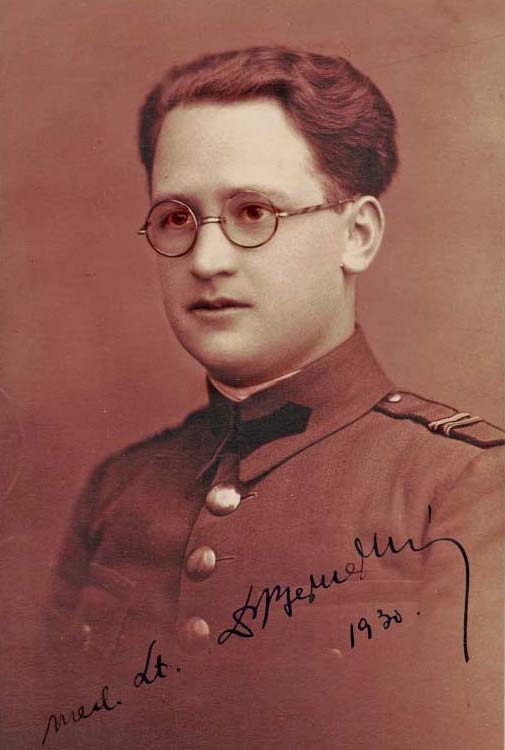
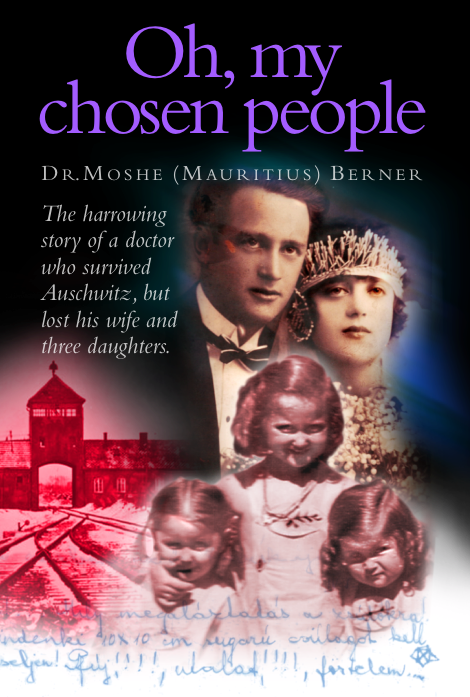
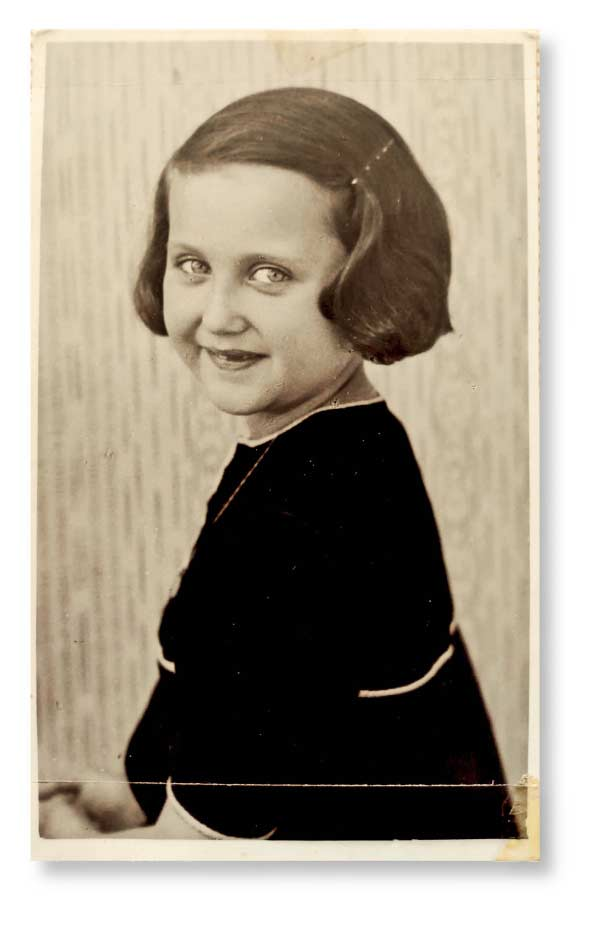
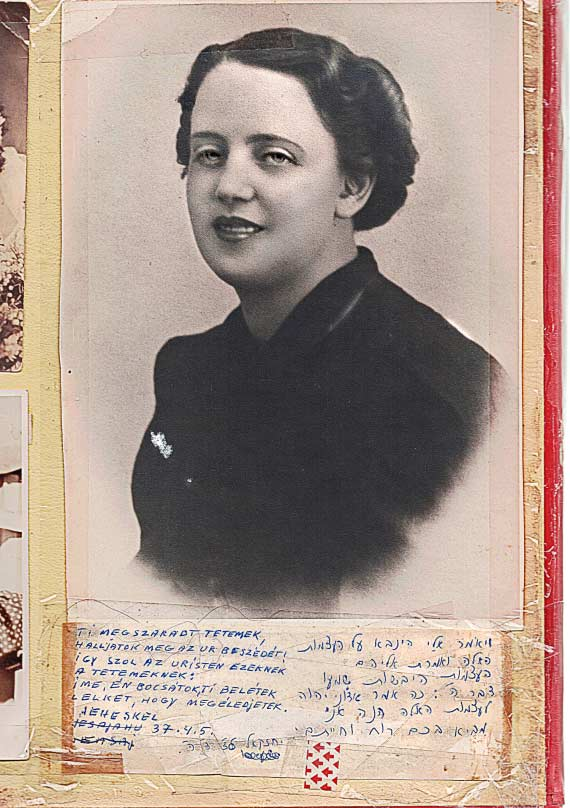
In 1947, a Hungarian Jewish doctor named Moshe Berner published a slim book in Hungarian. Its title was a bitter prayer: Oh, kiválasztott népem! — Oh, my chosen people! It is a Transylvania Holocaust testimony written with the clinical precision of a physician and the shattered tenderness of a father who lost everything. His wife Ida. Their three daughters — Zsuzsi, and her twin sisters Nora and Helga. His brother Izidor, Izidor’s wife Rozsa, and their son David. All taken from him at Auschwitz.
Dr. Berner survived. He wrote this account within two years of liberation, while memory was raw and names were fresh. The book was published in Hungary and then largely forgotten — one voice among the tens of thousands trying to speak before the world moved on. Now, nearly eighty years later, it has been translated into English for the first time.
We share the first pages of the book on this page, download the entire PDF of the book here.
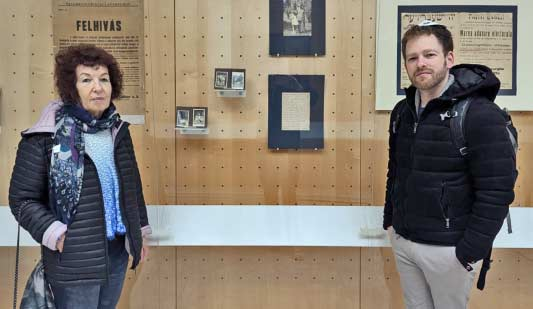
The book opens with Zsuzsi Berner’s diary, discovered in Budapest decades after the war. They surfaced in time to be included in the 2025 exhibition “Jews in Transylvania” at the Hungarian Jewish Museum. Inbal Berner, Dr. Berner’s granddaughter, introduces them.
Tap to Download Oh, my chosen people PDFOh, my chosen people by Dr. Moshe Berner
Not for commercial use.
This material is provided for private study, scholarship, or research as part of Holocaust studies. Unauthorised reproduction or distribution is prohibited.
— Dr. Moshe Berner

Zsuzsi’s Diary — the last entries
These pages from Zsuzsi’s diary were discovered in Budapest. They were included in the These pages from Zsuzsi’s diary were discovered in Budapest. They were included in the 2025 exhibition ‘Jews in Transylvania’, at the Jewish Museum, Budapest.
I am so excited! We’ve finished school, and the report cards will be issued soon! Because the war is raging, my dear little diary, we Jews are in a particularly difficult situation.
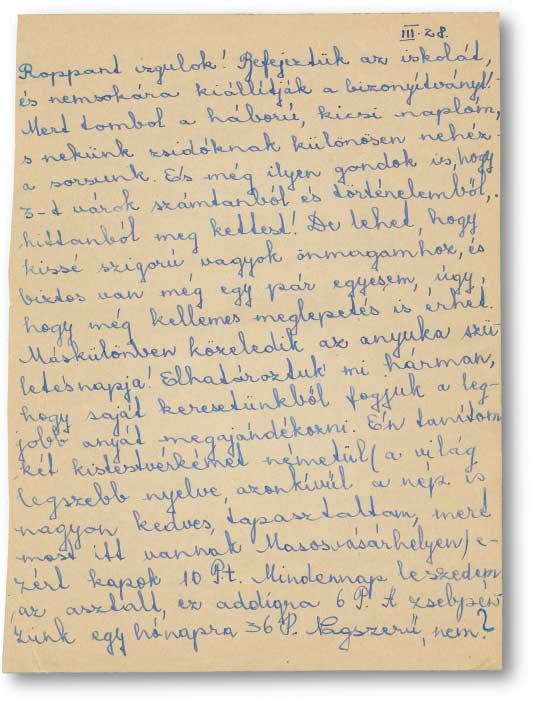
And even with such troubles I expect 3 in arithmetic and history, and a 2 in religion. But maybe I’m a bit strict and I’m sure I’ve got a few more one grades, so I’m in for a pleasant surprise. Otherwise, Mum’s birthday is coming up! The three of us decided to make it on our own. We’re going to give the best mother a present from our own earnings.
I’m teaching my two little sisters German (the most beautiful language in the world, and the
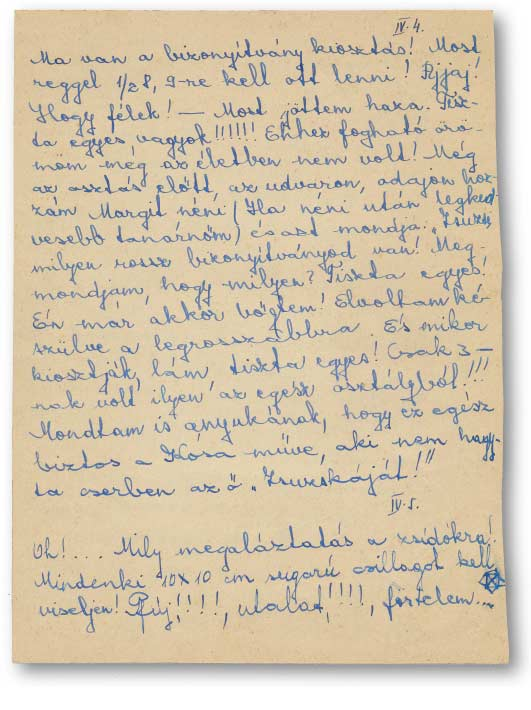
people are also nice, I’ve experienced it here in Marosvásárhely), so I get 10 pengő. Every day I clear the table, and for that it’s 6 pengő. Our allowance for a month is 36 pengő. Great, isn’t it?
Today is the report cards distribution! You have to be there by half-past eight in the morning! Oh dear! I’m scared!
I just got home. All the grades are 1!!!! I have never had such joy in my life. Before class, in the courtyard, Aunt Margit (the nicest teacher after Aunt Lia) comes up to me and says, ‘Zsuzsi, what a bad report card you have! Shall I tell you how it is? All 1 grades!’ And I cried already by then! I was prepared for the worst. And when they handed it out it was all 1 grades! Only 3 of the whole class had that!!! I told my mom that it must have been Kósa who didn’t let her Zsuzska down!
(‘Aunt’ is a respectful title for a female teacher.)
Oh!.. How humiliating for the Jews! Everyone must wear a 10x10cm star!!!! Yuck!!!! hate!!!! Abomination…
Seventy-Two Days
It is Sunday, March 19th, 1944. After eighteen months of forced labour, I have been allowed home, to return to my family for five days. It is a beautiful, sunny afternoon in early spring. The city’s inhabitants cannot know that in a few hours they will swarm like ants, trying to make sense of the rumours, trying to extract fact from fiction.
At the cinema, the audience at the six o’clock screening is shown newsreel of a shocking event that has occurred in Hungary. The next performance, at eight o’clock, is cancelled, and the audience has their tickets refunded at the box office. They are told that a decree from the Minister of the Interior has closed all cinemas and places of entertainment.
In frustration, the audience pours out into the street, vociferously demanding the reason for the ban. They meet others who seemingly, as is always the case, know from ‘reliable sources’ that the Regent, Miklós Horthy, is critically ill, or possibly even dead. The police disperse the crowds, announcing that all public gatherings are forbidden.
Everyone rushes home to try to discover what has happened from their radios, although many Jews no longer possess receivers, as months before, the police confiscated them.
That evening, even those still in possession of a wireless remain ignorant, because there is no news of the incident given by Hungarian radio, which only broadcasts non-stop Gypsy music and military marches. Foreign broadcasting stations give no information either. But there is a general fear that something momentous has happened. Christians and Jews alike spend the night without sleep.
Everyone waits impatiently for the morning bulletins. Perhaps they will tell us what’s happening. Nevertheless, the following day, Monday, no explanation is broadcast either. There is feverish speculation, along with exaggerated stories that alarm everyone. It is only after three days, on Wednesday, that foreign radio stations break the news that German troops have entered Hungary and have removed the government.1 The Regent himself, Admiral Horthy, has been placed under German supervision. Some workers in nearby offices manage to get a telephone connection with Budapest, and from them, news spreads like wildfire; and, as usual, in different versions of the truth.
The radio plays military music incessantly. Newspapers have not arrived for days, and it is impossible to travel to and from Budapest; however, from the few facts that we have, it is certain that something life-changing has occurred, especially for us Jews. On the fourth day, Hungarian radio announces that the government has resigned, and
1. On March 20th 1944, Adolf Eichmann arrived in Budapest, to oversee the “final solution to the Jewish question” in Hungary. Hitler also appointed an SS Holocaust perpetrator, Edmund Veesenmayer, as Reich Commissioner for Hungary. Although sentenced in 1949 to 20 years imprisonment for war crimes, Veesenmayer was released in 1951 by the United States High Commission. According to British intelligence, he subsequently encouraged movements to restore Nazism in Germany. He died in 1977.
that Admiral Horthy has accepted its resignation. A new government is formed, headed by Döme Sztójay, a former envoy in Berlin, as Prime Minister, along with Minister of the Interior, Andor Jaross, and Secretary of State, László Endre. Their reputation as rabid anti-Semites is enough to increase our anxiety.
The new government announces that, “In order to achieve the common war goals more fully, German troops have entered the country.” The Hungarian government remains silent about the size of the invading units and their aims. The very next day, Hungarian radio heightens its anti-Semitic broadcasts.
We Jews of Transylvania have long wondered how a German occupation might affect us, although we are reassured by the fact that the German troops stop at the Tisza River, many miles to the West of us in Marosvásárhely (Târgu Mureș). We hope that fate will be kind to us, and that we will remain beyond the reach of the Germans. We draw encouragement from the good will of the Christians around us, and of local military units of the Ninth Division, and the Székely Guard. I had spoken with many of them, and they assured me faithfully that they will defend the Jews of Transylvania as vigorously as they would any other Hungarian, and that they were determined to prevent the entry of the Germans into our region. A sign of their goodwill towards us is that they assure us that they are counting on the participation of Jews in this fight.
I believe that they mean what they say, however, the new government, with cynical disregard of their patriotism, hands over the combat-ready Székely Division to the Germans in one fell swoop. These soldiers are ordered to report for training, taken to the front line and incorporated into German army units.
Over the recent months, Jews had listened anxiously to the increasingly belligerent words pouring from Hungarian radio, fearing that they would inflame the barely hidden antagonism of people towards us. One after another, anti-Jewish decrees had been published by the authorities. The first order commands that from April 1st 1944, no Jewish household is allowed to hire Christian servants. The law even applies to Christians employing those of their own faith, while living in the homes of Jews. Our wives and children receive this decree with shrugs of indifference. They decide that they will do the housework themselves. Jewish girls from poorer families immediately offer to work as servants for families that could still afford them.
The decree of the yellow star is enforced on April 5th. It is intended to distinguish Jews from others. This is more pernicious, not only for its demeaning purpose, but because it also applies to children, who are forced to wear it. Their journey to and from school now becomes hazardous, with threats and acts of intimidation by neighbouring thugs. A further decree severely affects the freedom of movement of Jews, restricting us from travelling by train or any other means of transport. Within two weeks, Jews are effectively confined to their homes. We are forbidden to use the postal service. We cannot write letters, send telegrams, or send or receive money.
In the middle of April, on a Friday, the feared German Gestapo appears in our town, and within a few hours, the control of the traffic in the city is taken over by the German military police. The Gestapo close our places of worship. Evening prayers are no longer permitted in the two large synagogues in our city. A German military guard is placed over the house of God. The next morning, a rumour spreads that many of our Jewish dignitaries have been taken into police custody. Terror and anxiety permeates every home. We wait our turn.
The Germans summon our Jewish leaders to appear before them, and order the immediate establishment of a Jewish council. The Nazis declare that they will only communicate with the Jewish population through this assembly. They inform the Jewish leaders that they are entirely responsible, at the risk of their lives, for their community’s strict observance and execution of the military authority’s orders; and that the lives of the hostages held captive by the Gestapo, depended on this.
The task assigned to the Council is not easy. It is ordered to collect as much as 500,000 pengős (2) within twenty-four hours, and to provide the Germans with 110 fully furnished apartments, with the best furniture, carpets and pictures. They are also to collect all typewriters, fine linen, and silver cutlery.
2. The Pengő was the currency of Hungary between 1927 and 1946. In 1941, 200,000 pengő was worth about 40,000 USD.
Tap to Download Oh, my chosen people PDF
Inside the Testimony — From Auschwitz to Liberation
The excerpt above opens a testimony that spans seventeen chapters, from the seventy-two days of the Jewish community’s destruction in Marosvásárhely through Dr. Berner’s imprisonment at Auschwitz (prisoner number A16058), his transfer to Dachau, epidemic, uprising, liberation, and homecoming. The complete book is available for download.
- Zsuzsi’s Diary — The Last Entries
- Seventy-Two Days
- Auschwitz
- A16058
- Organising
- Across the Electrified Fence
- Two Heroes
- A Mutiny
- Towards the Unknown
- Dachau
- Epidemic
- Uprising
- Liberation
- Homecoming
- From the Ashes — A Family Reborn (Eilat Negev)
- Judith’s Story
- Frankfurt War Crimes Trials Testimony, 1964
The People Behind This Transylvania Holocaust Testimony
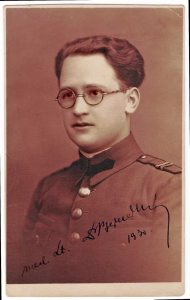
Dr. Moshe (Mauritius) Berner — Author
A physician and Medical Lieutenant in the Royal Hungarian Army, Dr. Berner was a member of the Jewish community of Marosvásárhely (Târgu Mureș), Transylvania. He survived Auschwitz-Birkenau and Dachau. His wife Ida and their three daughters Zsuzsi, Nora, and Helga, along with his brother Izidor, sister-in-law Rozsa, and nephew David, none of whom survived Auschwitz. He wrote this testimony within two years of liberation. It was first published in Hungarian in 1947.
Martin Baker — Translator and Editor
Co-translator and editor of the 2026 English edition, working alongside Inbal Berner to bring Dr. Berner’s testimony to English-speaking readers for the first time.
Inbal Berner — Translator, Editor, and Granddaughter
Dr. Berner’s granddaughter and co-translator of the 2026 edition. Inbal introduces the recently discovered diary entries of Zsuzsi Berner, which were exhibited at the Hungarian Jewish Museum in 2025.
Eilat Negev — Contributing Historian
Author of the historical essay “From the Ashes — A Family Reborn,” which traces how the surviving Berner family rebuilt after the war.
This testimony is presented wtih Remember.org. Individual chapters are available throughout the site.
Not for commercial use. [Contact Here]
This material is provided for private study, scholarship, or research as part of Holocaust studies. Unauthorised reproduction or distribution is prohibited.


