

I’d like to call your attention to Selma van de Perre, nee Velleman, a Jewish Dutch resistance fighter and concentration camp survivor who died in October 2025 at the age of 103.
She wrote her autobiography to describe her experiences: van de Perre, S. (2021). My name is Selma: The remarkable memoir of a Jewish resistance fighter and Ravensbruck survivor.
Return to Holocaust Survivor Testimonies and Interviews
Selma Velleman van de Perre was a distant relative of my husband’s family. My father-in-law (Moritz Velleman), his brother (Arthur Velleman), and other Jewish relatives escaped from Belgium to the US via Portugal, with help from Aristides de Sousa-Mendez. Other family members did not survive.
I’ve written a poem about Selma that I’d love for you to share. – Shelley Velleman, 12/3/25 (see below)
The Jewish Dutch Resistance Fighter Rises
On June 7, 1922, a girl named Selma Velleman was born in Amsterdam to a theatrical family. Her father Barend was an actor, singer, and presenter. Her mother Fem had trained as a milliner. They were Jewish, but liberal and non-practicing. Her father had formally renounced the faith. It was an ordinary Amsterdam childhood in an artistic household, until it wasn’t.
By 1942, the ordinary had become impossible. Selma was called to report to a fur factory supplying the German army. She secured an exemption. Then her father was arrested and taken to Camp Westerbork. Selma helped her mother and younger sister Clara go into hiding in Eindhoven. There was no room for her.
This is where many stories of the Holocaust begin, with a family fractured, with someone left outside, with impossible choices made in impossible circumstances. What happened next determined everything.
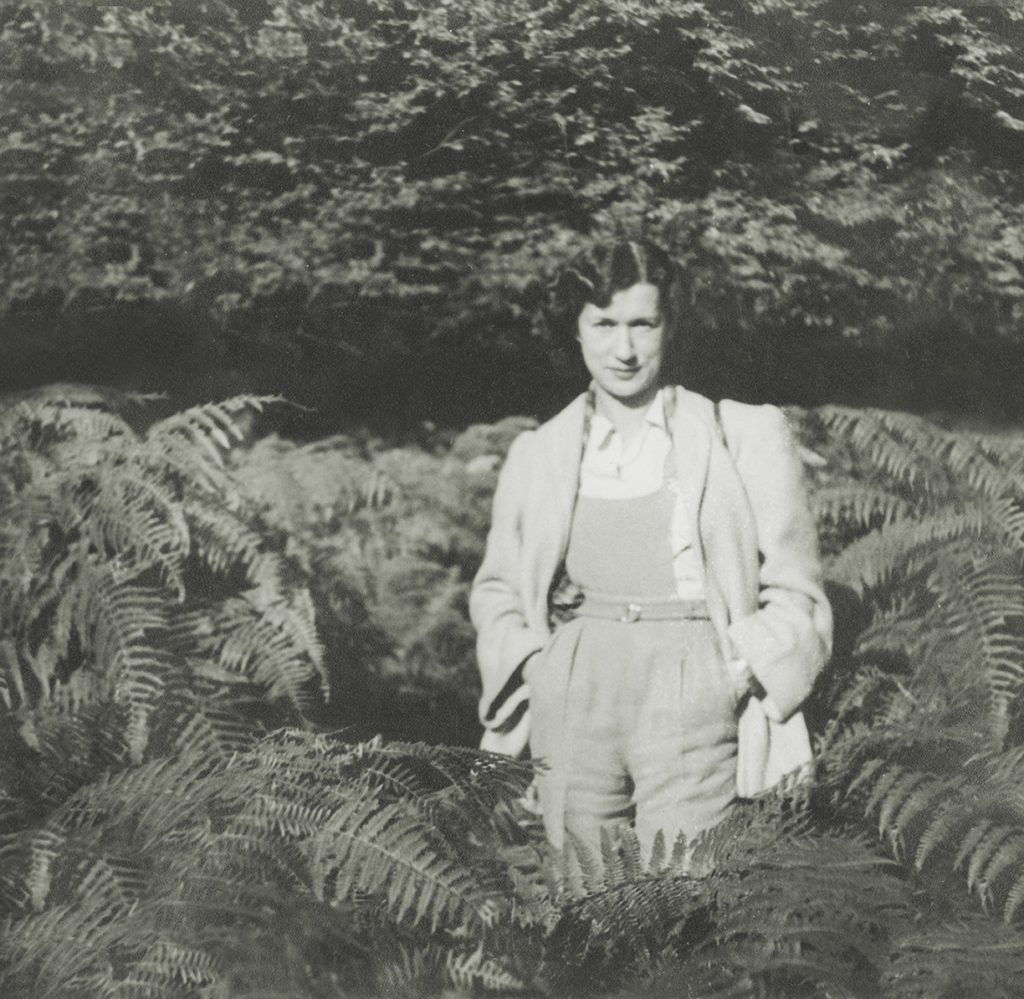
Selma
By Shelley Velleman, © 12/3/25
Father sent to Auschwitz,
mother and sister hiding
in a home with no room for her.
Fake ID
to hide her identity
as a Jew:
Marga van der Kuit.
She survived to tell the tale.
Joining the resistance,
carrying messages
across the lines,
across borders, even
into Nazi headquarters in Paris.
She survived to tell the tale.
Betrayed,
sent to Herzogenbusch
concentration camp,
sabotaging gas masks
intended for German soldiers.
She survived to tell the tale.
Transferred to Ravensbrück
to make airplane parts;
infected by lice and dysentery,
interrogated, beaten, starved.
Determined not to allow them
the satisfaction of seeing her die,
she survived to tell the tale.
Prisoners
sharing bits of food,
songs, poems, life stories
to keep each other going;
some were marched to death,
others shot or gassed.
Few survived to tell the tale.
Finally liberated;
Selma Velleman, again, at last.
Emaciated, sick,
saddened at the loss
of father, mother, sister,
aunts, uncles, friends,
and many, many more.
She survived and told the tale.
What Did Selma van de Perre Do in the Dutch Resistance?
When her family was torn apart, Selma didn’t just hide. She joins the TD Group, one of the first Dutch resistance organizations, and becomes a courier: that role meant carrying messages, illegal papers, and forged documents throughout the Netherlands.
Under her false identity, she travels into the heart of Nazi-occupied territory. For two years, she risks discovery at every checkpoint, every train station, every moment.
Marga van der Kuit replaces Selma
Selma Velleman stopped existing. In her place appeared Marga van der Kuit, a woman with false papers and a new identity. It was a common enough strategy for survival—become someone else, hide in plain sight. But Selma did more than hide.
The word “courier” had a specific meaning during the occupation: messenger of the resistance. These were mostly women who moved through checkpoints and across borders, carrying information, messages, documents that could mean life or death. They carried secrets in their pockets and lies on their lips, and if caught, they carried the consequences.
Selma carried messages throughout the Netherlands. She crossed borders. Each journey was a calculated risk. Each checkpoint was a test of nerve. One wrong answer, one suspicious glance, one piece of paper that didn’t match, and it ended.
For two years, she passed every test.
How Did Selma van de Perre Survive Ravensbrück Concentration Camp?
Survival began with a twist of fate: when Selma was betrayed and arrested in June 1944, the Nazis classified her as a political prisoner—Marga van der Kuit, Dutch resistance member—not Selma Velleman, Jew.
This false identity, maintained through interrogations and beatings, likely saved her life. But survival at Ravensbrück required more than luck.
It required an act of will: refusing to give her captors the satisfaction of her death, sharing scraps of food with fellow prisoners, and holding onto humanity through songs, poems, and shared stories in a place designed to destroy both body and spirit.
Jewish Dutch Resistance Betrayed
In June 1944, someone talked. Selma was betrayed and arrested. But the Nazis who arrested her didn’t know she was Jewish. They classified her as a political prisoner.
This classification likely saved her life, though what followed hardly looked like salvation.
She was sent first to Camp Vught, then transferred to Ravensbrück concentration camp. Ravensbrück was built for women—political prisoners, resistance fighters, asocials, criminals, and later, Jews. By the time Selma arrived, it had become a factory of death operating under the pretense of labor.
At Vught, she sabotaged gas masks intended for German soldiers. Small acts of resistance, dangerous beyond measure. At Ravensbrück, she was beaten severely.
The beatings were interrogation, punishment, routine violence. After recovering, she applied for work in the Siemens production hall – not because the work was easier, but because the conditions were marginally better. She made airplane parts for the German war machine while surviving on starvation rations.
Lice. Dysentery. Daily roll calls in freezing weather. Guards who could shoot you for looking wrong. Gas chambers formerly storage facilities operating down the road. Selections. Transports. Death everywhere, casual and constant.
Shelley Velleman, Selma’s relative, wrote in a recent poem:
“Determined not to allow them the satisfaction of seeing her die,
she survived to tell the tale.”
That determination was built on small acts of mutual survival. Prisoners shared bits of food when they had nothing to share.
They sang songs, recited poems, told each other their life stories to maintain the thread of their humanity. Some were marched to death. Others were shot or gassed. Few survived.
Selma survived.
Liberation and Loss
On April 23, 1945, Ravensbrück was liberated. The Swedish Red Cross took Selma to Gothenburg. There, finally safe, she revealed her true name. Not Marga van der Kuit, but Selma Velleman.
She returned to the Netherlands and learned what survival had cost. Her father had been murdered at Auschwitz.
Her mother and sister Clara—the ones she had helped hide in Eindhoven, the ones who had been arrested in 1943—had been murdered at Auschwitz and Sobibór. Aunts, uncles, friends: murdered. The list of the dead was longer than the list of the living.
She was emaciated. She was sick. She was saddened beyond measure. And she had survived.
Who Was Selma van de Perre and How Did She Survive the Holocaust?
Selma van de Perre was a Dutch-Jewish woman who transformed from an Amsterdam teenager into a resistance courier, concentration camp survivor, BBC journalist, and lifelong Holocaust educator.
She survived by living under a false identity for nearly three years—first as a resistance fighter, then as a political prisoner at Ravensbrück. Her survival depended on maintaining her cover, her determination not to die, and ultimately, her choice to rebuild her life and tell her story so that others would remember what happened.
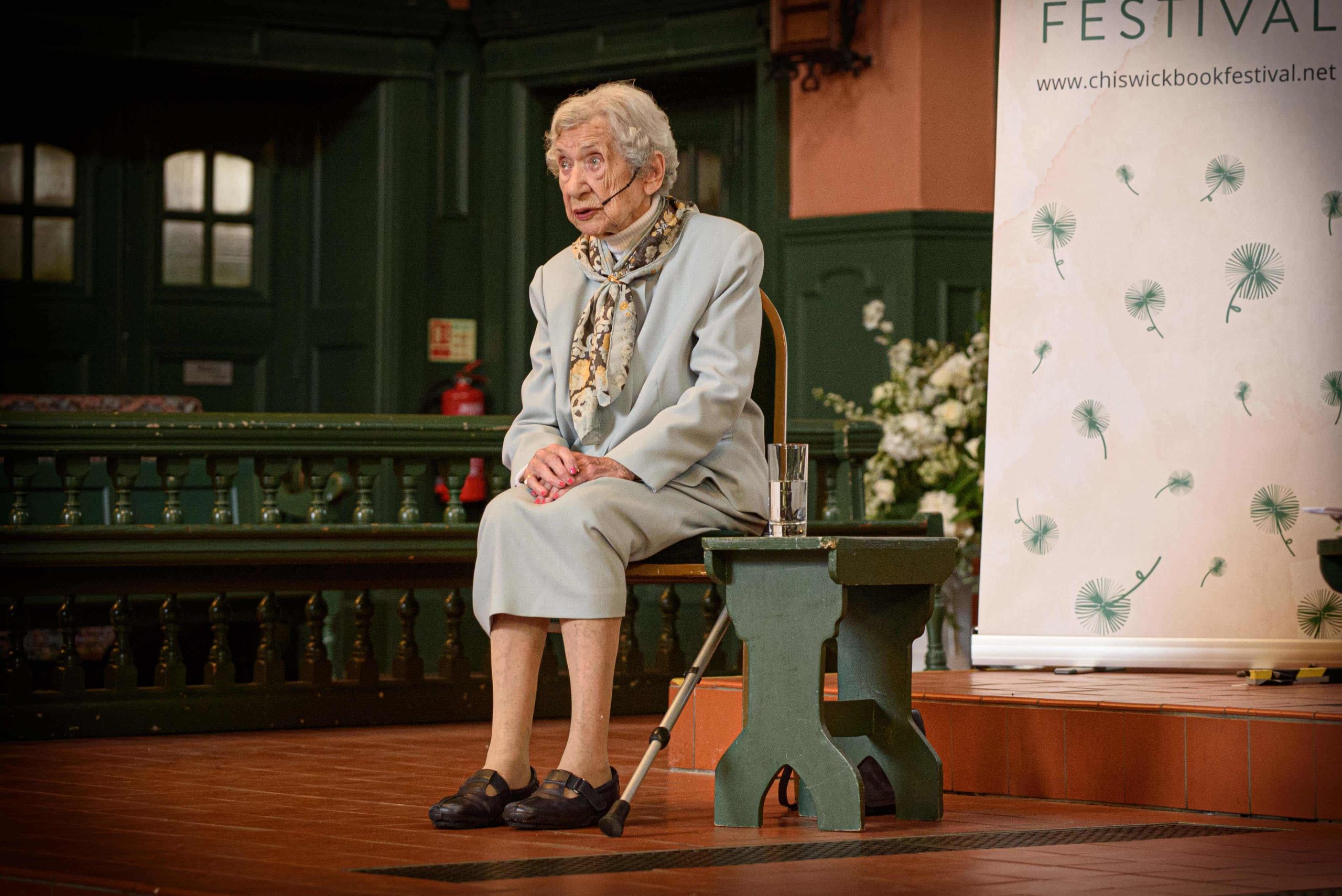
The Second Life
In 1947, with help from her brother David who had survived by sailing with the Dutch Steamboat Company, Selma secured a job at the Dutch embassy in London. She studied anthropology and sociology.
She became a teacher of sociology and mathematics at Sacred Heart High School in Hammersmith. She worked as a journalist at BBC Radio Netherlands, where she met Hugo van de Perre, a Belgian journalist whose father had founded De Standaard.
They married in 1955. When Hugo died suddenly in 1979, Selma continued his work as a foreign correspondent. She worked for the BBC, AVRO Televizier, and De Standaard until retirement. She became a British citizen. She built a second life, a journalist’s life, a life of words and witness.
But the first life never left her.
Telling the Tale
Starting in 1995, Selma returned to Ravensbrück every year for a week to talk about the war with Dutch and German students. She did this for decades. Year after year, she went back to the place of her torture and spoke to young people who had not been born when the camps existed.
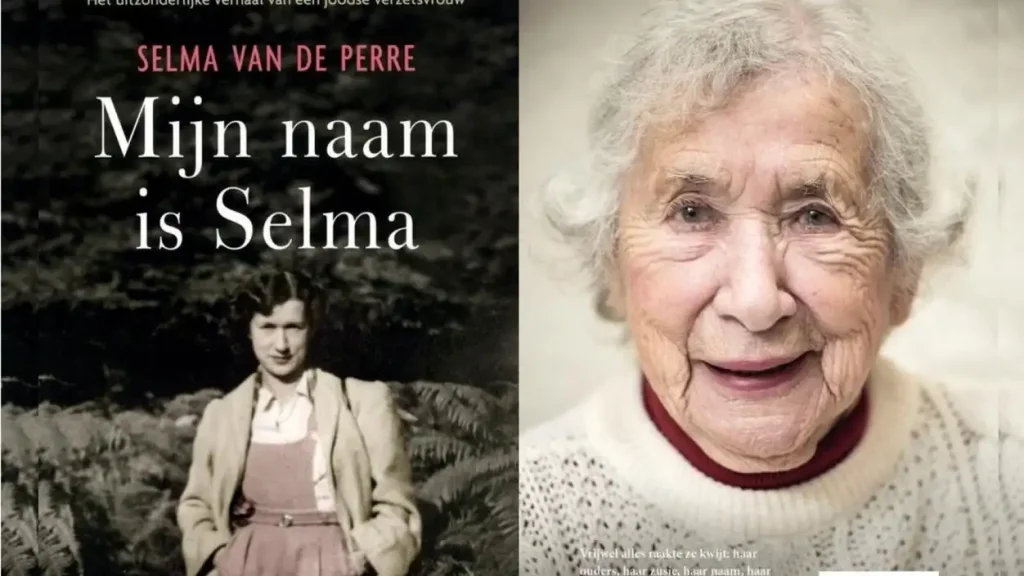
At her nieces’ and nephews’ urging, she began writing her memoir in 2003. It took nearly two decades. “My Name Is Selma” was published in the Netherlands in 2020 as “Mijn naam is Selma.” She was 98 years old.
The Dutch government awarded her the Resistance Memorial Cross in 1983 and the Order of Orange-Nassau in 2021. She turned 100 on June 7, 2022. She died in London on October 20, 2025, at the age of 103.
The Work of Memory
At 98, Selma finally published her memoir. At 100, she was still here to see it translated, read, discussed. At 100, she talked about her book and her experience.
She went back to Ravensbrück every year. That’s why she finally wrote her memoir. That’s why, when asked to speak, she spoke.
The Holocaust wasn’t abstract for Selma. It was her father Barend, the actor and singer. Her mother Fem, the milliner. Her sister Clara. Aunts, uncles, friends whose names she knew, whose faces she remembered, whose absence she carried for eighty years.
She chose resistance when hiding would have been safer. She chose false papers and dangerous missions. She chose sabotage in the camps.
She chose to survive—not passively, but actively, defiantly. She chose to speak when silence would have been easier. She chose to return to the place of her torture. She chose to write it down.
Remembrance Day 2026
Shelley Velleman wrote her poem about Selma on December 3, 2025, less than two months after Selma died. The poem moves through the stages of Selma’s war—each stanza ending with that refrain, “She survived to tell the tale,” until the final shift: “She survived and told the tale.”
Past tense. Completed. Done.
The story has been told, and remembered. Selma made sure of that.
She told the tale, and now we carry it forward. That’s what Remembrance Day asks—not just to remember that atrocities happened, but to remember the people who lived through them and refused to let their stories die with them.
Selma survives in her book and her family’s hearts. And she keeps the memory alive each time we read her book, learn about her, and speak her name.
The rest is up to us.
_______________________________________________
Learn More About Selma van de Perre and Jewish Dutch Resistance Fighters
Jewish Book Council interview with Selma – “Resistance in Holland: A Conversation with Selma van de Perre” (2021)
Times of Israel feature – “At 97, Dutch resistance hero works to give Jewish fighters overdue recognition” (2020)
History Net profile – “Selma Van De Perre: BBC Journalist, Dutch Resistance Fighter, and Ravensbrück Survivor” (2022)
Holocaust Educational Trust interview – Student ambassadors speak with Selma about her wartime experiences
_______________________________________________
Selma van de Perre lived from June 7, 1922 to October 20, 2025. Her memoir, “My Name Is Selma,” is available in English and Dutch