
Birkenau Penal Company
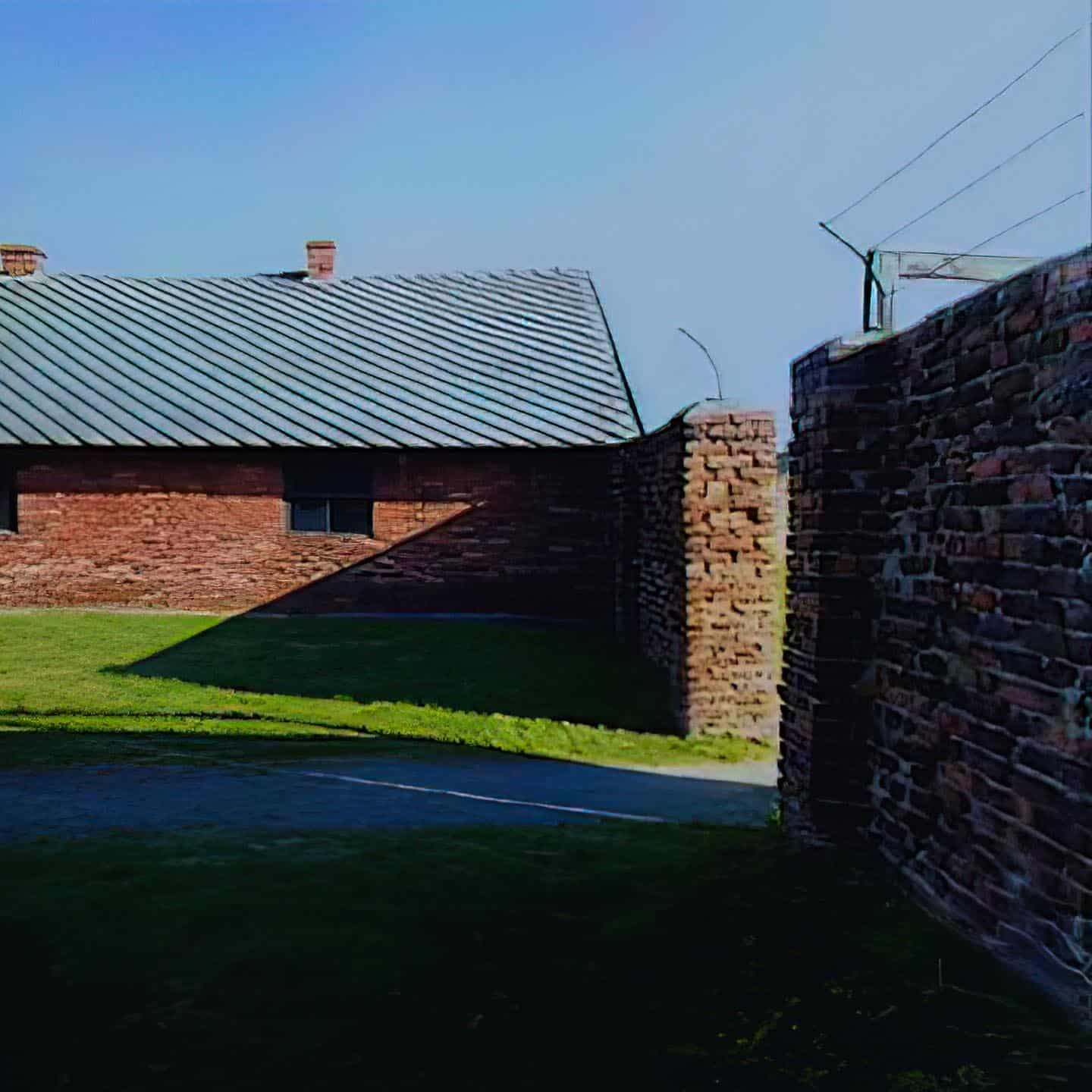
The Birkenau penal company became a punitive unit established in June 1942 within the Auschwitz II-Birkenau camp, specifically designed to punish female prisoners.
“The penal company was created in early August 1940, originally for Catholic priests and the few Jews who were in Auschwitz at the time.
Later, any prisoner could be sent there. The majority were Poles, although there were also Jews, Germans, and, in 1944, Soviet POWs. “ Auschwitz-Birkenau State Museum
← PREVIOUS
Birkenau Latrines
The Hardest Work Begins: The Penal Company
The barrack on your left is the Birkenau penal company. On the right you see its courtyard.
The prisoners sent here always worked in the open air, always at the hardest tasks, often in water to the waist, and lived in an isolated BIb, Block No. 6, and in the BIId section in Birkenau.
The women’s penal company operated until July 1944, when the entire unit was transferred to Ravensbrück Concentration Camp. This transfer effectively ended their specific punishment at Birkenau, as they were integrated with other prisoner blocks rather than remaining in isolated penal status.

They worked in winter and in summer without socks, in Dutch clogs, and sparse clothing.
Receiving food was at the whim of the block leader, perhaps yes, or no. More often than not they went sleepless because of the constant shouting and blows.
They slept on the bare floor without even straw mattresses, leaving their rags in a prescribed order in the corridor.This Block was not heated. It is obvious that people in such conditions fell to illness in wholesale numbers.
Until 1943 it was not permissible to take sick people from the penal company into the hospital. Deprived of medical assistance, the seriously ill were doomed to death in Block 6.
However the greatest percentage perished at the hands of the block leader. He would line up the prisoners by a wall, hit them in the jaw with his fist, or alongside the head, smashing their heads against the wall.
Initially housed in Block 11 at Auschwitz I, the unit was transferred to Birkenau in May 1942, where prisoners endured extreme physical labor, such as digging ditches and pulling heavy road rollers, often under the supervision of notorious sadists like Ernst Krankemann.

Isolation and Labor: Prisoners were completely isolated from the rest of the camp population and subjected to the hardest labor, including dredging mud, clearing ponds, and demolishing buildings.
Abuse: They faced continual beatings by SS guards and prisoner functionaries.
Notable Atrocities: In October 1942, German female functionary prisoners killed approximately 90 Jewish women from France under the pretext of suppressing a mutiny.
← PREVIOUS
Birkenau Latrines
CREDITS AND COPYRIGHT
The Virtual Tour of Auschwitz photos by Alan Jacobs.
This exhibition was prepared by invitation from
Auschwitz-Birkenau State Museum, Oswiecim, Poland
Photographs taken in Auschwitz and Birkenau in the years 2003-2004.
They were then converted into one of the first VR tours by Krysia Jacobs.
Updated in 2022 to a video-based Virtual Tour of Auschwitz.
© 2003, 2004 Alan Jacobs all rights reserved
All artist reproductions courtesy of Auschwitz Museum Archive.
Please contact us with questions related to this exhibit.