
Roma Holocaust Memorial Day: Why August 2 Matters
Roma and Sinti communities remember those murdered at Auschwitz-Birkenau and throughout Nazi-occupied Europe.
Return to the Roma and Sinti Holocaust
Why Roma Remember August 2nd
August 2 has become the day on which these lives are honored. During the night of August 2–3, 1944, the remaining prisoners held in the Roma and Sinti family camp (aka the Gypsy camp) at Auschwitz-Birkenau were murdered. Nearly 4,000 people — mostly women, children, and elderly men — were lost in a single night. This night sits at the center of the lengthy Roma and Sinti Holocaust timeline of survival.
A new generation has now taken up the work of remembrance.
Beginning in 2010, the European Roma youth network ternYpe brought together young people from across Europe through its Roma Genocide Remembrance Initiative, Dikh He Na Bister.
They created opportunities for education, dialogue, and leadership, ensuring that young Roma would become the keepers of their own history.
Young Roma Gather to Remember
Each year on August 2, they are joined by historians, educators, descendants, and friends. They pause to remember. They remember children who never got the chance to be adults. Parents who tried to protect their families. The victims, survivors, and family names are spoken, and remembered.
Artists, musicians, craftsmen, horse traders, teachers, laborers, and neighbors lives were cut short because the Nazi regime declared they did not belong.
Dikh He Na Bister – Roma Genocide Remembrance Initiative
European Roma Holocaust Memorial Day – Council of Europe: https://www.coe.int/en/web/portal/-/european-roma-holocaust-memorial-day-2
In 2014, on the genocide’s 70th anniversary, more than a thousand young people from twenty-five countries gathered in Kraków and Auschwitz-Birkenau under that name — Dikh He Na Bister — that helped lead the European Parliament to formally recognize August 2 as European Roma Holocaust Memorial Day the following year.
On August 2nd, we also remember the survivors, the ones who carry the tradition of remembering and building up a people devastated by the Holocaust, yet rarely considered when talking about history, or reparations for what was done to them.
That loss has come to represent the broader genocide carried out against Roma and Sinti across Europe during the Holocaust.
From Berlin to the Carpathian Mountains, Roma and Sinti Survivors
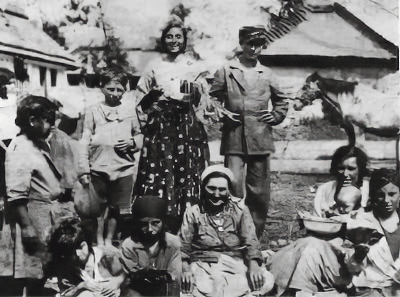
These records extend the story beyond one night: family documents, postwar relationships among Roma and Jewish survivors, and Lina Jackson’s testimony about persecution and survival.
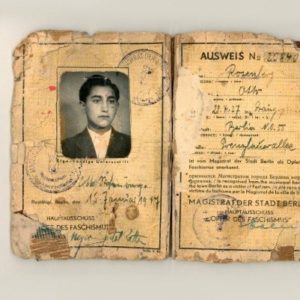
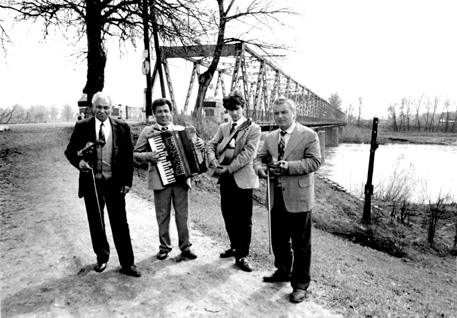
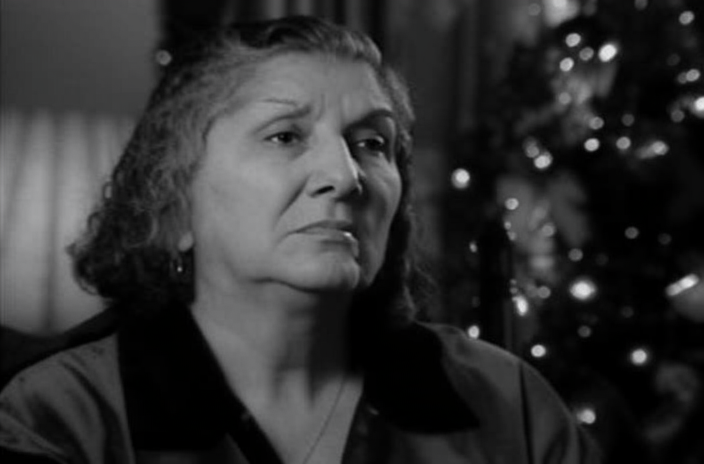
Images: Oscar Rosenberg’s 1944 Ausweis – identity documentation from Berlin; Roma and Jewish survivors featured in Carpați; Lina Jackson’s survivor testimony. Full context and sources appear in the related articles.
Preserving Roma Holocaust Remembrance
Historians estimate that between 220,000 and 500,000 Roma and Sinti were murdered under Nazi rule and by its collaborators. The true number may never be known. Entire families disappeared without records, and many communities had long been ignored by governments that kept incomplete or inaccurate population records.
Continue reading: To understand the policy decisions that led to this day, see When Did the Final Solution Begin for the Roma? →
Although their persecution arose from the same racial ideology that targeted European Jews, the history of Roma and Sinti during the Holocaust has too often remained on the margins of public memory.
Many people complete their education without ever hearing about the Roma genocide. Many museums and classrooms have only recently begun giving it the attention it deserves.
Remembering is not a competition between histories. Every community that suffered under Nazi persecution deserves to be seen for who they were, not simply for how they died.
In Romani, Dikh He Na Bister means:
Look and Don’t Forget.
The words are an invitation.
Roma Survivor Voices
Else Baker Remembers
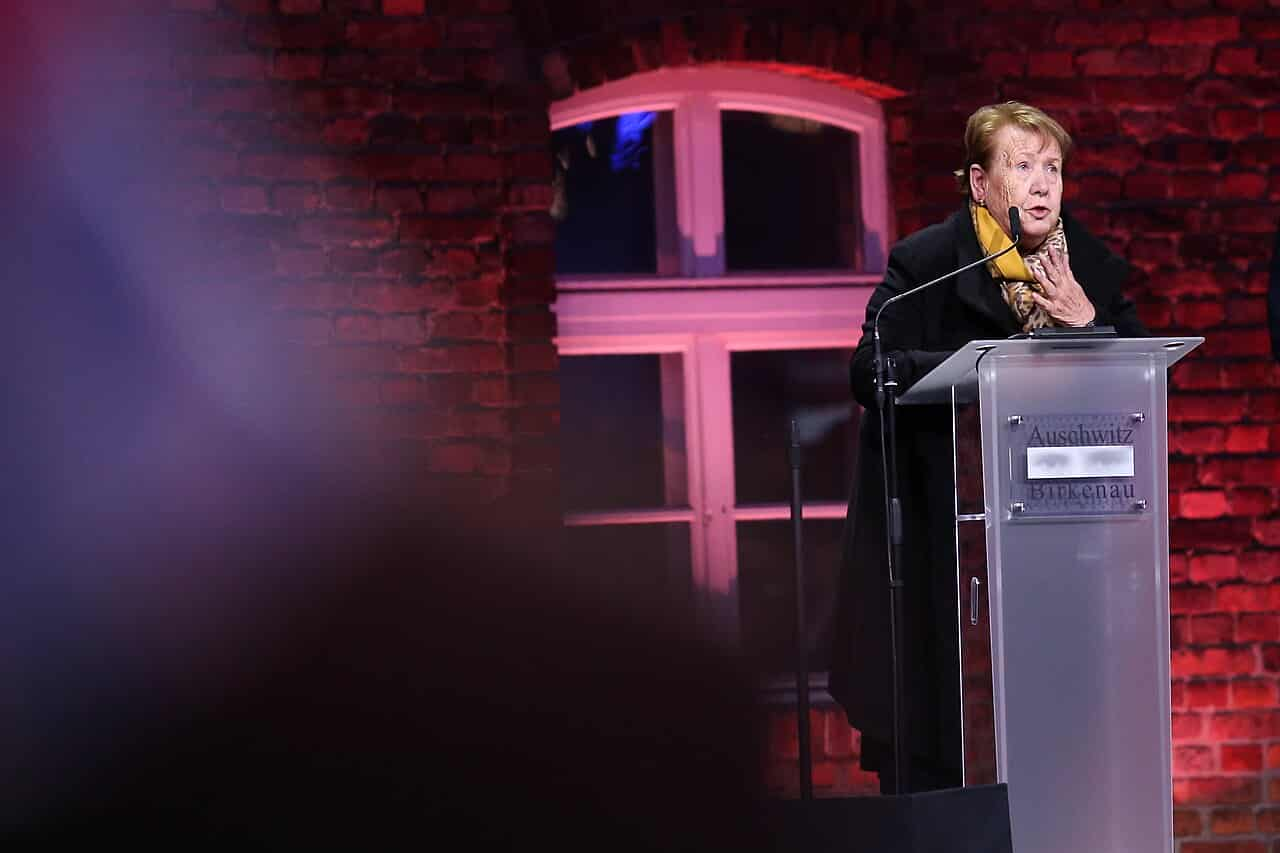
Memorial in Rome
Remember Roma and Sinti Lost in the Camps

Explore family stories deserving a place alongside every other chapter of Holocaust history.
Survival, Culture and Memory
Papusza – Poet Survivor
During the Second World War, she hid with her Roma group from persecution in the forests of Volhynia, a traumatic experience that she processed in her work.
Remembrance doesn’t change the past; it shows us how to look to our own future, learning from what happened. Every generation decides whose stories it carries forward.
Remembering the Roma and Sinti is part of remembering the Holocaust. The Nazi campaign of racial persecution reached many communities, each with its own history, culture, and loss. This is about recognition, not competition, of a people whose history was cast aside for years from negligence.
History isn’t written only by historians, it’s written by the families and people who together overcame every brutal attack by the Nazis. And share their stories, and of those who didn’t make it back home.
On August 2, we remember those who were murdered.
We honor those who survived.
We give thanks to those who found the courage to tell their stories.
And we recognize the people who continue the work today, making sure memory is passed on with care, to their families.
Dikh He Na Bister. Look. And don’t forget.

Return to the Roma and Sinti Holocaust